
Biography
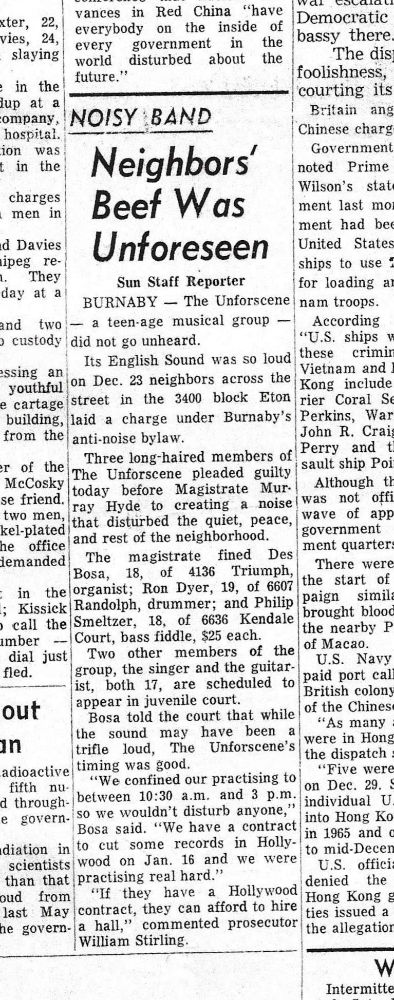
Once there was a band called The Mods. Five teenaged lads from Canada. They recorded a demo, changed their name to The Unforscene, and two members of the band went to L.A. with said demo, seeking opportunities.
Humble beginnings
The Mods started off as Ron Dyer and Jerry Matheson’s band in Vancouver suburb, South Burnaby. They practised at Ron’s parent’s house, much to the chagrin of the neighbours. Dan Yard joined, and Dan brought in Des Bosa. Dan and Des were the North Burnaby guys. The band got a manager and played numerous gigs, mostly at local community hall dances.
Some girls from Abbotsford B.C. started a Mods fan club, which sponsored regular dances in that town, featuring The Mods.
When The Mods’ guitar player quit the band, John Murray, who was in a band called William Tell & The Marksmen, was brought in to replace him. William Tell’s other guitarist, Lindsay Mitchell, went on to form another very successful Canadian band called Prism. WT’s drummer went on to join an early incarnation of Heart and played on their big hit, Magic Man.
Meanwhile, Dan’s high school buddy, Terry Robotham, was writing some great songs. The band loved Terry’s songs and started playing them during their live performances.
A personal conflict arose within the band that resulted in Jerry’s departure. Jerry was replaced by Phil Smeltzer.
Des’s brother, Nat Bosa, financed a recording session is Seattle. Dan and Nat took the resulting demos to Los Angeles and knocked on doors.
They hit up all the major labels. The A&R guy at Dot records suggested they check out Don Perry, a former producer at the label. Don had just started his own label, Momentum, and was looking for artists.
“Don flipped over the songs,” Dan recalls, “and brought the band down to record. We had just replaced Jerry, our bass player, with Phil. It was all very exciting. We thought we’d hit the big time!”
In his book, Don Perry Produced the Music, Hollywood record producer, Don Perry, wrote:
“In late ’66 two members of a band from Canada called ‘The Unforscene’ brought some demo records to me. I was blown away. Terry Robotham and Dan Yard were just 15 & 16 years old but their songs were unbelievable. These kids wrote hits and for the first time in my young career I had an act that was unbelievably talented and unbelievably on top of the current music trends.”
Perry produced four singles for The Unforscene, on both his own Momentum label, and later with Mike Curb’s Sidewalk Records. Radio airplay in the USA eluded the band, however, Perry secured a release in Canada on the London label and the band enjoyed plenty of airplay on Canadian radio stations, particularly in their hometown of Vancouver, B.C.
Vancouver radio station CFUN issued a Canadian music chart to promote local bands. The Unforscene were interviewed a few times on-air on CFUN and other stations across B.C. This exposure pushed These Are the Words to the top of the charts in several areas in Canada.
The band consisted of Des Bosa (keyboards), Ron Dyer (drums, vocals), Jerry Matheson (bass, vocals), John Murray (lead guitar, vocals), Phil Smeltzer (bass, vocals), Dan Yard (rhythm guitar, vocals), and Terry Robotham (songwriter).
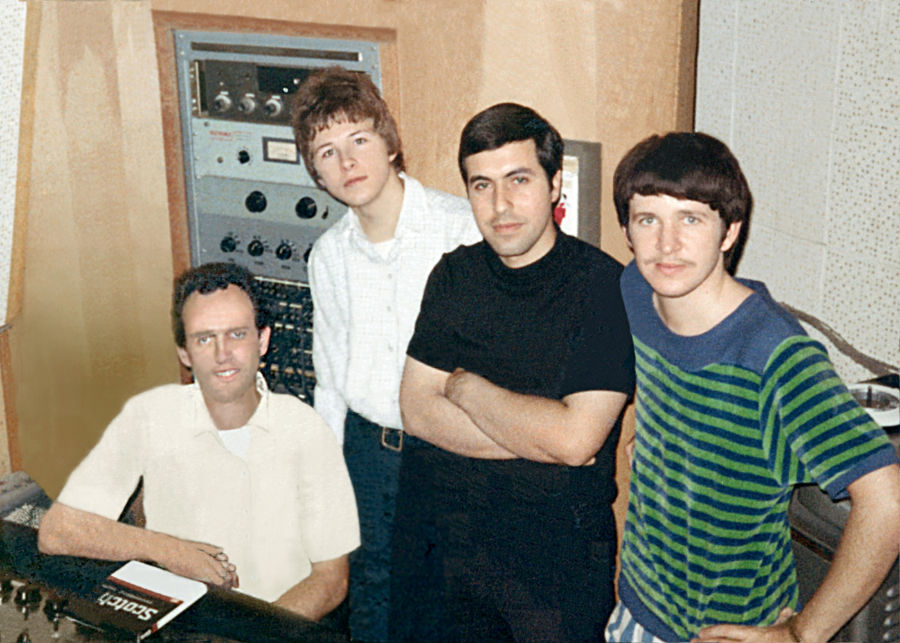
These Are The Words burned itself out after a few months, and so did the band. The guys were getting straight jobs and everyone drifted apart. Back in L.A., Don Perry recruited a friend, the hustling Mike Curb, who had just formed hos own label, Sidewalk Records. Don got Mike to take on The Unforscene’s two main songwriters, Dan and Terry. Mike loved the songs too and brought Dan and Terry down for more recording sessions in the summer of 1967. It was decided the name, The Unforscene, would be kept, and Don stayed on as producer.
An arranger was brought in, the brilliant Bob Summers, to help out on the sessions. Bob could play everything. He wrote out the music for the strings and horn section arrangements that were added and supervised the session musicians who played them. The songs really came to life with the Hollywood studio musicians.
Mike spent considerable funds developing the act and decided the first release should be a cover of a Danny Hutton (Three Dog Night) song rather than an original by Dan and Terry. It turned out to be a mistake. Roses and Rainbows flopped, and Mike Curb moved on to a new project. By 1971 he had become one of the top producers in the industry, eventually racking up an amazing 419 #1 hits in Country, Rock ‘n’ Roll, and R&B, and a total of 1,609 top-ten records to his credit.
“We met him too soon,” Dan reflects. “Timing is everything, and our timing meeting Mike Curb was off by about three or four years.”
Dan and Terry returned to Vancouver having enjoyed the experience but disappointed by how things turned out. They kept in touch over the ensuing years , but The Unforscene were done.
Or, were they?
The album that The Unforscene never made: Modular
Not until now.
The Reunion album.
In 2016, while Dan was recording a new song called New Cool, the idea of an Unforscene reunion bubbled to the surface. The lyrics reflect the concept of everything old being new again. Dan pitched the idea to the other former members of The Unforscene who were still living in the Vancouver area, and they were all onboard. As the concept gathered momentum it was decided that they would do a mix of new material and re-imagined versions of some of their classic tunes.
Of the new songs, Des contributed Wait Out the Night, and Willie’s Song. Dan contributed New Cool, Treasure In My Palm, and the intro, Ode To the Mods. John brought Missing You In Mazatlan and Fly Away. Little Toy, Many Thanks, and She’s Rare (Don’t Lose Her) are Unforscene songs from the 60s, dressed up with all-new arrangements, while Whiskey Woman is one of Terry’s newer songs.
Des’s songs were recorded at Warehouse Studios in Vancouver, while the rest of the album was recorded by Dan’s long-time friend, Rene Young, at his home studio in Abbotsford. With no record label contract dictating deadlines, this reunion album was painstakingly recorded while working around everyone’s busy schedules.
For fun, they decided to use “CP364 Records” as the label, named after the steam locomotive the band was photographed in, back in their heyday. A limited run of CD copies have been manufactured, with digital download copies also being available.
Videos of New Cool and Wait Out the Night were shot by Rene Young and can be seen via our Gallery page.